Key Takeaways
- Regular chimney cleaning helps remove soot, creosote, ash and debris so smoke can move safely out of the home.
- Creosote buildup and blocked chimneys can cause smoke blowback, unpleasant odours and increased fireplace safety risks.
- Homeowners should arrange chimney cleaning at least once a year, especially before winter and heavy fireplace use.
- Professional chimney and fireplace cleaning keeps the flue clear, the firebox cleaner and the fireplace safer to use.
A fireplace can make a home feel warm, comfortable and inviting during the colder months, but it also needs proper care to work safely. Over time, soot, creosote, ash, leaves, nests and debris can build up inside the chimney and affect how well smoke leaves the home. A professional chimney cleaning and fireplace cleaning service can help Sydney homeowners keep their fireplace cleaner, safer and ready for winter use.
For many homeowners, chimney maintenance is easy to forget because most of the problem is hidden inside the flue. The firebox may look tidy, but the chimney above it can still contain soot, creosote or blockages. When this buildup is left untreated, it can affect smoke flow, create unpleasant odours, and increase safety risks.
This guide explains why chimney cleaning matters, what builds up inside a chimney, the signs to look for, and how regular fireplace maintenance can help protect your home.
Why Chimney Cleaning Matters for Fireplace Safety
Chimney cleaning is an important part of safe wood fireplace maintenance. Every time you use a wood-burning fireplace or wood heater, smoke travels through the chimney or flue. As it moves upward, soot, ash and creosote can stick to the internal surfaces.
A clean chimney helps smoke, gases and odours move out of the home properly. When the flue is blocked or heavily coated, smoke may not travel as freely. This can lead to poor draught, smoky rooms, unpleasant smells and difficulty keeping the fire burning.
Regular chimney sweeping helps reduce the buildup that affects fireplace performance and safety. It also allows a technician to inspect visible parts of the fireplace system, including the firebox, damper, chimney cap, and flue condition.
This is especially important before winter, when fireplaces are used more often. A fireplace that has been sitting unused for months may have hidden debris, moisture issues or nests inside the chimney. Cleaning before heavy use gives homeowners more confidence when the colder weather arrives.
What Builds Up Inside a Chimney?
A chimney may look simple from the outside, but it can collect several types of buildup over time. Most of it is not visible from the room, which is why homeowners may not realise there is a problem until the fireplace starts smoking, smelling or performing poorly.
The most common materials that build up inside a chimney include:
- Soot, ash and creosote from repeated fireplace use
- Leaves, twigs, bird nests and animal debris entering from above
- Moisture-related residue, musty odours and debris from long periods of non-use
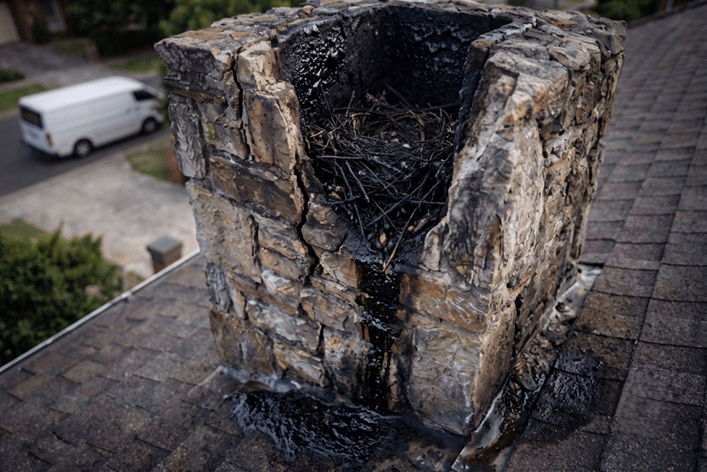
Soot and ash are expected when burning wood, but they should not be left to build up heavily. Creosote is more concerning because it can become thick, sticky, and combustible. Leaves and nests can also create a blockage that restricts smoke flow.
Older homes may be more prone to chimney issues, especially if the fireplace has not been used or serviced for a long time. Even if the fireplace appears clean at ground level, the flue may still need professional attention.
How Creosote and Soot Can Affect Safety
Creosote is a residue that forms when wood smoke cools and sticks to the inside of the chimney. It can appear as a black or dark brown coating and may become flaky, sticky or hardened depending on the condition of the chimney and how the fireplace is used.
Over time, creosote buildup can narrow the chimney pathway and affect smoke movement. It can also increase fireplace safety risks because creosote is combustible. The more buildup inside the flue, the more important it becomes to arrange professional chimney cleaning.
Soot can also affect safety and comfort. Heavy soot buildup may contribute to smoke stains around the fireplace opening, unpleasant odours, and a dirty firebox. It can make the fireplace feel messier and less pleasant to use.
The type of wood you burn can also influence buildup. Unseasoned or damp wood tends to create more smoke and residue than properly seasoned firewood. Poor airflow can make the problem worse because smoke does not move through the chimney as efficiently.
Professional chimney cleaning helps remove soot, creosote, and ash from key parts of the fireplace system, reducing the buildup that can affect smoke flow and safety.
Why Blocked Chimneys Cause Smoke and Odours
A chimney relies on draught. This is the movement of air that helps pull smoke up through the flue and out of the home. When the chimney is clean and clear, smoke should move away from the fireplace efficiently.
When there is a blockage, that movement can be restricted. Leaves, nests, soot, creosote, debris, damaged parts, or a poorly functioning damper can all affect airflow. If smoke cannot travel upward properly, it may come back into the room.
Smoke blowback is one of the most noticeable signs of a chimney problem. It can make the room uncomfortable, leave stains around the fireplace and create strong odours that linger after the fire is out.
Musty smells can also occur when moisture, debris or animal nesting material sits inside the chimney. These odours may become more noticeable when the fireplace is not in use, during humid weather or when air moves down through the flue.
A professional chimney sweep can help clear blockages and identify visible issues that may be affecting smoke flow.
Common Signs Your Chimney Needs Cleaning
A dirty or blocked chimney does not always show obvious signs straight away. In many cases, the warning signs become more noticeable once the fireplace is used again after months of sitting idle.
Homeowners should consider chimney cleaning if they notice:
- Smoke entering the room instead of flowing up the chimney
- Strong smoky, musty, or burning smells around the fireplace
- Black soot marks around the fireplace opening
- Difficulty starting or maintaining a fire
- Excessive ash, soot or debris in the firebox
- Crackling or unusual sounds coming from the chimney
- Visible leaves, nests, or debris near the chimney opening
- The fireplace has not been cleaned in over 12 months
These signs do not always mean there is a serious fault. Some may simply point to cleaning and maintenance being overdue. However, smoke entering the room, unusual smells or visible chimney damage should not be ignored.
If the issue continues after cleaning, a more detailed inspection or repair may be needed.
What Is Included in Professional Chimney Cleaning?
Professional chimney cleaning is more thorough than scooping ash from the firebox. It focuses on removing buildup from the chimney and fireplace system so smoke can move more freely, and the fireplace can be used with greater confidence.
A chimney sweep may clean soot, ash, creosote and debris from the flue, firebox and accessible areas. They may also check visible components such as the chimney cap, damper, firebox, hearth and surrounding structure.
The Guys Group’s chimney sweep service includes chimney and flue cleaning, wood heater and open fireplace servicing, smoke testing and draft checks, bird nest or debris removal and maintenance recommendations. Their team also uses protective sheeting and vacuum tools to keep the home clean during service.
A professional service can also help identify visible concerns such as cracks, blockages, nesting material or signs of animal activity. This is useful because many chimney issues are hidden from normal view.
For homeowners, the main benefit is peace of mind. Instead of guessing whether the chimney is clean enough to use, a professional can inspect and clean the areas that matter most.
How Often Should Homeowners Clean Their Chimney?
Most homeowners should arrange chimney cleaning at least once a year if the fireplace is used regularly. Annual cleaning helps reduce soot, creosote and debris before they build up too heavily.
Some fireplaces may need more frequent cleaning. A wood heater used every night through winter will usually need more attention than an open fireplace used only occasionally. Homes that burn unseasoned wood, experience poor draught or have older chimney systems may also need more regular servicing.
The best time to clean a chimney is before winter. This helps prepare the fireplace before the period of heaviest use. It also gives homeowners time to address any visible maintenance concerns before colder weather arrives.
Landlords and property managers should also treat chimney cleaning as part of regular residential maintenance. If tenants are using a wood fireplace, proper servicing helps support safer use, better smoke flow, and fewer winter maintenance issues.
The Chimney Guys recommend at least annual chimney cleaning, especially for fireplaces used regularly, and note that even occasional use can create buildup over time.
Why Pre-Winter Fireplace Maintenance Is Important
Pre-winter fireplace maintenance is practical because it helps remove buildup before the fireplace is needed most. Once cold weather arrives, homeowners often begin using their fireplace more frequently, which can make existing chimney problems more noticeable.
Cleaning before winter can reduce the chance of smoky rooms, musty smells, poor draught and blocked airflow during peak use. It also helps clear out any leaves, nests or debris that may have entered the chimney during warmer months.
This is also a good time to check for visible signs of damage. Cracks, rust, missing caps, damaged dampers or water entry can all affect fireplace performance. While chimney cleaning is not the same as major repair work, a professional service may help identify when further maintenance is needed.
For Sydney homeowners, fireplace use may be seasonal, but that does not make chimney cleaning less important. A fireplace that is used only a few times each winter can still collect soot and creosote over the years. Occasional use still needs maintenance.
Pre-winter servicing is also part of broader home care. Just as gutters, air conditioners and exterior areas need regular attention, chimneys and fireplaces should be maintained before problems become inconvenient or unsafe.
Chimney Cleaning vs Fireplace Cleaning: What’s the Difference?
Chimney cleaning and fireplace cleaning are closely related, but they are not the same. Understanding the difference helps homeowners know what kind of service they may need.
Fireplace cleaning usually focuses on the visible area inside the home. This includes the firebox, hearth, ash, soot marks, and surrounding fireplace area. It improves cleanliness, presentation, and comfort when using the fireplace.
Chimney cleaning focuses on the flue and internal pathway where smoke exits the home. This is where soot, creosote, nests, leaves and blockages often build up. A fireplace can look tidy while the chimney above it still needs cleaning.
Both services are important for safer and cleaner fireplace use. If the visible fireplace area is dirty, messy or stained, fireplace cleaning can help. If the chimney has not been swept, smoke is not flowing properly or the fireplace has not been serviced in over a year, chimney cleaning is essential.
For many homeowners, the best approach is to address both the visible fireplace and the hidden chimney pathway together.
Keep Your Fireplace Safer, Cleaner and Ready for Winter
Regular chimney and fireplace maintenance helps Sydney homeowners use their wood fireplace with more confidence through the colder months. A professional chimney cleaning service helps remove soot, creosote, ash and debris from the flue, while a fireplace cleaning helps keep the visible fireplace area cleaner and more comfortable to use.
If your fireplace smells smoky, smoke is coming back into the room, the fire is hard to maintain or the chimney has not been cleaned in over 12 months, it may be time to arrange professional servicing.
The Guys Group provides professional chimney and fireplace cleaning for Sydney homes, helping homeowners prepare their fireplace for safer, cleaner and more reliable winter use.


