
Key Takeaways
- Regular air conditioning cleaning helps improve airflow, cooling performance and indoor air quality in Sydney homes and businesses.
- Dirty filters, coils and fan barrels can spread stale air, reduce cooling and cause musty smells inside the property.
- Professional aircon cleaning removes dust, mould and bacteria from internal components that basic filter cleaning cannot reach.
- Booking a clean every 6 to 12 months helps keep the system fresher, more efficient and ready for heavy seasonal use.
Air conditioners work hard in Sydney homes, apartments, strata buildings and commercial properties. They cool indoor spaces, move air through rooms and help keep people comfortable through humid days and warmer seasons. But when filters, coils, fan barrels and internal components collect dust, mould and bacteria, the system can start pushing stale air back into the property. Regular air conditioning cleaning helps restore cleaner airflow, support better cooling performance and keep your system operating more efficiently.
For many property owners, aircon cleaning is only considered when the unit starts to smell, leak or blow weak air. In reality, cleaning should be part of ongoing property maintenance. A split system may still turn on and cool the room, but that does not mean the inside of the unit is clean.
This guide explains why air conditioning cleaning matters, how it improves indoor air quality and performance, what is included in a professional clean, and how often Sydney properties should book regular servicing.
What Is Air Conditioning Cleaning?
Air conditioning cleaning is the professional cleaning of the key internal components of a split system air conditioner. It is not the same as a quick filter rinse, and it is not the same as mechanical air conditioning repair. The focus is on removing built-up dust, mould, bacteria, grime and odour-causing material from parts of the unit that affect airflow, hygiene and cooling performance.
A proper clean may include filters, evaporator coils, fan barrel, vents, drain tray, drainage line and surrounding internal surfaces. These are the areas where dust and moisture commonly collect over time.
For homes, apartments and offices, aircon cleaning helps keep the system fresher and more hygienic. For strata managers and commercial property managers, it can also form part of a scheduled maintenance plan that supports tenant comfort, workplace presentation and long-term asset care.
The key point is simple. If air passes through a dirty system, the room may not feel as fresh, clean or comfortable as it should.
Why Does Regular Air Conditioning Cleaning Matter?
Air conditioners naturally collect airborne particles as they operate. Dust, pet hair, lint, pollen, moisture and other indoor contaminants can pass through the unit and settle on internal parts. Over time, this buildup can affect both air quality and performance.
A dirty air conditioner may still operate, but it often has to work harder. Blocked filters reduce airflow. Dirty coils can make cooling less effective. A contaminated fan barrel can push dust and odours back into the room. Moisture inside the unit can also create conditions where mould and bacteria may build up.
Regular servicing helps prevent this buildup from becoming a bigger issue. Instead of waiting for weak airflow, musty smells or poor cooling, scheduled cleaning keeps the system in better condition throughout the year.
This is especially important in Sydney, where air conditioners may be used heavily during summer, warm autumn days and humid weather. Properties near busy roads, coastal areas, construction zones or leafy suburbs may also experience faster dust, debris or moisture buildup.
For homeowners, this means better comfort and cleaner air. For property managers, it means fewer complaints about stale smells, poor cooling or dirty vents. For business owners, it helps maintain a more comfortable environment for staff and customers.
How Do Dirty Air Conditioners Affect Indoor Air Quality?
Indoor air quality can be affected by many factors, including ventilation, humidity, dust, cleaning routines, and how often air conditioning systems are maintained. When an air conditioner becomes dirty, it can contribute to stale or unpleasant indoor air.
Filters are designed to catch dust and particles, but once they become clogged, they are less effective. Instead of supporting clean airflow, they can restrict movement and allow buildup to settle deeper inside the system. The air may feel heavy, dusty or less fresh after the unit has been running.
Mould is another common concern. Air conditioners produce condensation as they cool the air. If moisture remains inside the unit and mixes with dust, mould and bacteria may begin to develop. This is often one reason why a split system starts to smell musty when turned on.
Dirty internal components may also circulate odours through the room. In bedrooms, offices and small apartments, these smells can become noticeable very quickly because the air is being recirculated in a contained space.
Professional aircon cleaning helps remove the buildup that contributes to these issues. It does not replace good ventilation or general cleaning, but it plays an important role in keeping the air coming from the system cleaner and fresher.
How Does Aircon Cleaning Improve Cooling Performance?
Poor cooling is not always caused by a broken air conditioner. In many cases, the system may simply be dirty. When filters, coils, and fan barrels are affected by buildup, airflow becomes restricted, and the unit has to work harder to move cool air through the room.
Clean airflow is important because the system relies on consistent air movement to cool effectively. If the filter is blocked, less air can pass through. If the evaporator coil is dirty, the unit may struggle to transfer heat efficiently. If the fan barrel is covered in dust and grime, air movement may feel weaker even when the unit is set to a high fan speed.
This can lead to uneven cooling, longer run times, and higher strain on the system. You may notice that the room takes longer to cool, the air feels weaker from the vents or the unit needs to be set to a lower temperature to achieve the same result.
Cleaning helps restore the system’s ability to move air properly. When the internal parts are clean, the unit can operate with less restriction. This supports better cooling performance, more consistent comfort, and improved system efficiency.
This does not mean cleaning will fix every performance issue. If there is a refrigerant problem, electrical fault, or damaged component, a licensed repair technician may be needed. However, for many underperforming units, cleaning is one of the first and most practical steps to improve operation.
What Are the Common Signs Your Air Conditioner Needs Cleaning?
Some air conditioners clearly show when they need attention. Others slowly decline in performance over time, making the signs easier to miss. If your unit is used regularly, it is worth checking for these common warning signs:
- Musty, stale or unpleasant smells when the unit turns on
- Weak airflow from the vents, even on a higher fan setting
- Visible dust around vents, filters or the front casing
- Poor cooling performance despite a low temperature setting
- Water leaks, blocked drainage or moisture around the unit
- More dust settling indoors after the air conditioner runs
- Allergy-like irritation or discomfort when the unit is operating
- The system has not been professionally cleaned in 12 months or more
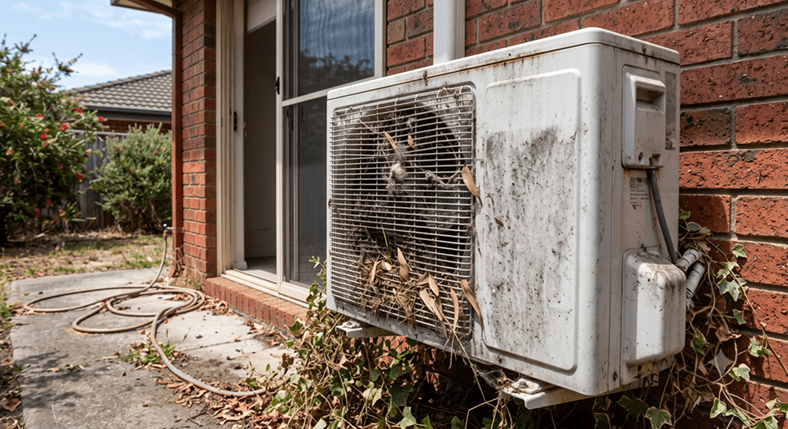
These signs do not always mean the unit is damaged. In many cases, they point to dust, mould or grime buildup inside the system. Booking a professional clean can help restore better airflow, remove odour-causing material and identify whether further maintenance is required.
What Is Included in Professional Aircon Cleaning?
A professional clean is more thorough than removing and rinsing the filters. The goal is to clean the parts that directly affect airflow, hygiene and system performance.
Depending on the unit and its condition, professional aircon cleaning may include:
- Inspecting the unit and checking visible signs of dust, mould or poor drainage
- Removing and cleaning the filters
- Cleaning evaporator coils and accessible internal surfaces
- Cleaning the fan barrel, vents and air outlet areas
- Flushing the drain tray or drainage line where required
- Applying anti-mould or antibacterial treatment where suitable
- Checking airflow and general operation after cleaning
- Protecting nearby walls, flooring and furniture during the service
This type of cleaning helps remove the buildup that basic DIY cleaning cannot usually reach. It is especially useful for split systems that have been operating for long periods without servicing.
For Sydney property owners, professional cleaning also gives peace of mind. A trained technician can identify signs of poor drainage, heavy contamination, or potential performance issues while cleaning the unit.
DIY Filter Cleaning vs Professional Aircon Cleaning: What’s the Difference?
Homeowners and tenants can still play a role in basic air conditioner maintenance. Cleaning or rinsing removable filters can help reduce surface dust and keep air moving through the unit more freely. This is a useful habit, especially during periods of heavy use.
However, filter cleaning only addresses one part of the system. A split system has internal components that are harder to access safely and thoroughly. Dust, mould and bacteria can build up behind the casing, on the coils, around the fan barrel and inside the drain tray.
DIY cleaning may improve the surface condition of the unit, but it will not deliver the same result as a professional internal clean. It can also be risky if water is sprayed into the wrong area or if the casing is removed without the right process.
The best approach is to combine both. Basic filter cleaning can be done regularly between services, while professional aircon cleaning should be scheduled to properly clean and treat the internal components.
This is similar to other property maintenance services. Simple upkeep helps day to day, but professional servicing is needed for deeper cleaning, better results, and long-term care.
How Often Should You Clean Your Air Conditioner?
For most residential split systems, professional air conditioning cleaning is recommended at least once every 12 months. This helps prevent dust, mould and bacteria from building up too heavily inside the unit.
However, some properties may need more frequent cleaning. Homes with pets, children, allergy-sensitive occupants or heavy daily use may benefit from a clean every 6 months. Apartments can also need regular servicing because split systems are often used in smaller spaces with limited natural ventilation.
Commercial properties may require a more structured schedule. Offices, retail spaces, clinics, gyms, childcare centres and hospitality venues may run air conditioning for long hours, which can increase dust and moisture buildup. In these environments, regular cleaning supports staff comfort, customer experience and general workplace presentation.
The best time to book cleaning is before heavy-use seasons. For many Sydney properties, this means before summer or before a period when the system will be used more frequently. Pre-season cleaning helps ensure the unit is ready before it is placed under higher demand.
Aircon Cleaning for Homes and Apartments
In homes and apartments, air conditioning cleaning supports everyday comfort. Bedrooms, living rooms, and home offices often rely on split systems for cooling during summer and warmth during cooler months. When the unit is clean, the air tends to feel fresher and the system can work more effectively.
For families, cleaning can help reduce the dust and odours that may circulate indoors. For tenants and landlords, it can support better property presentation and reduce complaints about musty smells or weak cooling. For apartment residents, it is especially useful because compact living spaces can make stale air and odours more noticeable.
Regular cleaning is also helpful when moving into a new home or rental property. You may not know when the air conditioner was last serviced, and the unit may contain buildup from previous occupants, pets or long-term use.
For homeowners who prefer a more organised maintenance plan, residential maintenance packages can help combine aircon cleaning with other property care services, making it easier to stay on top of seasonal upkeep.
Aircon Cleaning for Strata Properties
Strata properties often have multiple air conditioning systems across apartments, common areas, offices, foyers, gyms or shared facilities. Managing these systems one by one can become time-consuming for strata committees, building managers and property managers.
Scheduled aircon cleaning can make the process easier. Instead of waiting for individual complaints, strata managers can arrange servicing across multiple units or common areas at planned intervals. This can help reduce disruption, improve consistency and support better long-term maintenance.
Regular cleaning is also valuable in high-density buildings where ventilation, odours and comfort can become common concerns. A dirty split system in one apartment may affect the occupant’s comfort, while dirty common area units can affect visitors, residents and staff.
The Guys Group’s strata maintenance packages are designed for buildings that need a more coordinated approach to cleaning and maintenance. This can be useful for managers who want one team handling multiple essential services.
Aircon Cleaning for Commercial Properties and Workplaces
Commercial properties rely on consistent indoor comfort. Staff, customers, tenants and visitors all notice when a space feels hot, stale or poorly ventilated. A dirty air conditioner can affect comfort, create unpleasant smells and reduce the overall presentation of the business.
Offices, retail stores, clinics and other workplaces often use air conditioning for long hours. This means filters and internal components may collect dust and moisture faster than a lightly used residential unit. Regular cleaning helps reduce buildup before it affects airflow or comfort.
For businesses, scheduled cleaning can also minimise disruption. Services can be planned around quieter trading hours, tenancy requirements or broader maintenance schedules. This is particularly useful for offices, retail centres, clinics and shared workspaces where comfort is part of the customer or staff experience.
Aircon cleaning can also be combined with other maintenance services, which helps simplify coordination for business owners and facilities managers.
Can Aircon Cleaning Help Reduce Energy Use?
Air conditioning cleaning can support better energy efficiency by reducing restrictions inside the system. When filters are blocked and coils are dirty, the unit may need to work harder to move air and cool the room. This can increase running strain and reduce performance.
A cleaner system can operate more freely because air can pass through the unit with less resistance. Clean coils can also help the system cool more effectively, while a clean fan barrel can support stronger airflow.
It is important to be realistic. Cleaning alone will not guarantee lower power bills, especially if the system is old, incorrectly sized, poorly installed or in need of repairs. Energy use also depends on thermostat settings, insulation, room size, outdoor temperatures and how often the unit runs.
However, regular cleaning is still an important part of maintaining efficient operation. It helps prevent avoidable buildup and keeps the system in better working condition.
Why Does Regular Aircon Servicing Support Long-Term Property Maintenance?
Air conditioning cleaning should not be treated as a one-off task only booked when the unit smells bad. It works best as part of a regular maintenance routine.
For homeowners, scheduled cleaning helps keep indoor spaces more comfortable and reduces the chance of surprise performance issues during summer. For landlords, it supports rental property presentation and tenant satisfaction. For strata managers, it helps coordinate multiple units or shared areas more efficiently. For businesses, it supports a cleaner and more comfortable workplace.
Regular cleaning can also help identify small issues before they become more noticeable. A technician may see signs of blocked drainage, heavy mould buildup, poor airflow or parts that require further attention. While cleaning is not the same as repair work, it can help property owners understand the condition of their system.
The broader benefit is consistency. A well-maintained air conditioner is more likely to provide reliable comfort, cleaner airflow and better performance when it is needed most.
Book Professional Air Conditioning Cleaning in Sydney
Regular air conditioning cleaning helps improve indoor air quality, restore airflow and support better cooling performance across homes, apartments, strata buildings and commercial properties. By removing dust, mould, bacteria and odour-causing buildup, a professional clean can make your system feel fresher, work more effectively and provide better everyday comfort.
The Guys Group provides professional aircon cleaning as part of its broader Sydney property maintenance services. Whether you need a one-off clean before summer, scheduled servicing for a strata property or ongoing maintenance for a commercial site, their team can help keep your air conditioning system cleaner and more reliable.
Book a professional aircon clean today and keep your indoor spaces cool, fresh and comfortable through every season.


